

A property development feasibility study determines the viability of a project. It serves as the primary tool for decision-making and securing finance. Many developers produce studies that fail to reflect reality. This leads to project delays, budget overruns, and financial loss.
Jinton manages complex developments across multiple sectors. Our team has delivered over $1B in successful projects. Use this guide to identify failures in your current feasibility process.
1. Inadequate Data Collection
Reliable data is the foundation of a successful study. Many studies rely on secondary data or outdated reports. This creates a flawed baseline for all subsequent projections.
- The Problem: Using generic data instead of site-specific information.
- The Fix: Gather data from primary sources. Verify all inputs through direct surveys and professional consultations. Ensure data is current to the current month and quarter.
- Action Steps:
- Confirm site boundaries and easements.
- Verify existing utility capacities.
- Assess soil conditions through geotechnical reports early.
2. Insufficient Market Research
Market dynamics change rapidly. A study that ignores current demand and competitor pipelines will fail.
- The Problem: Assuming past performance guarantees future results.
- The Fix: Conduct a deep analysis of local demographics and consumer behavior. Study the regional economic factors influencing the specific asset class.
- Action Steps:
- Analyze the current supply pipeline for similar projects.
- Identify target demographic shifts in the immediate area.
- Review historical absorption rates for the specific location.

3. Overly Optimistic Revenue Assumptions
Inflated revenue projections make a project look profitable on paper. This leads to poor investment decisions.
- The Problem: Projecting top-of-market prices without justification.
- The Fix: Adopt a conservative approach. Use data-driven benchmarks for rental rates and sales prices.
- Action Steps:
- Apply a discount factor to peak market prices.
- Consult with local agents for realistic "walk-in" rates.
- Test revenue sensitivity against a 10% market softening.
4. Incomplete Construction Cost Estimation
Construction costs are the largest variable in any property development feasibility study. Missing costs can erode margins quickly.
- The Problem: Neglecting "soft costs" and indirect expenses.
- The Fix: Account for every cost element from inception to completion. Use a development manager to provide realistic cost benchmarks based on current market tenders.
- Action Steps:
- Include council contributions and permit fees.
- Account for utility headworks and connection charges.
- Include marketing, legal, and professional consultant fees.
- Apply a contingency of at least 5-10% for unforeseen works.
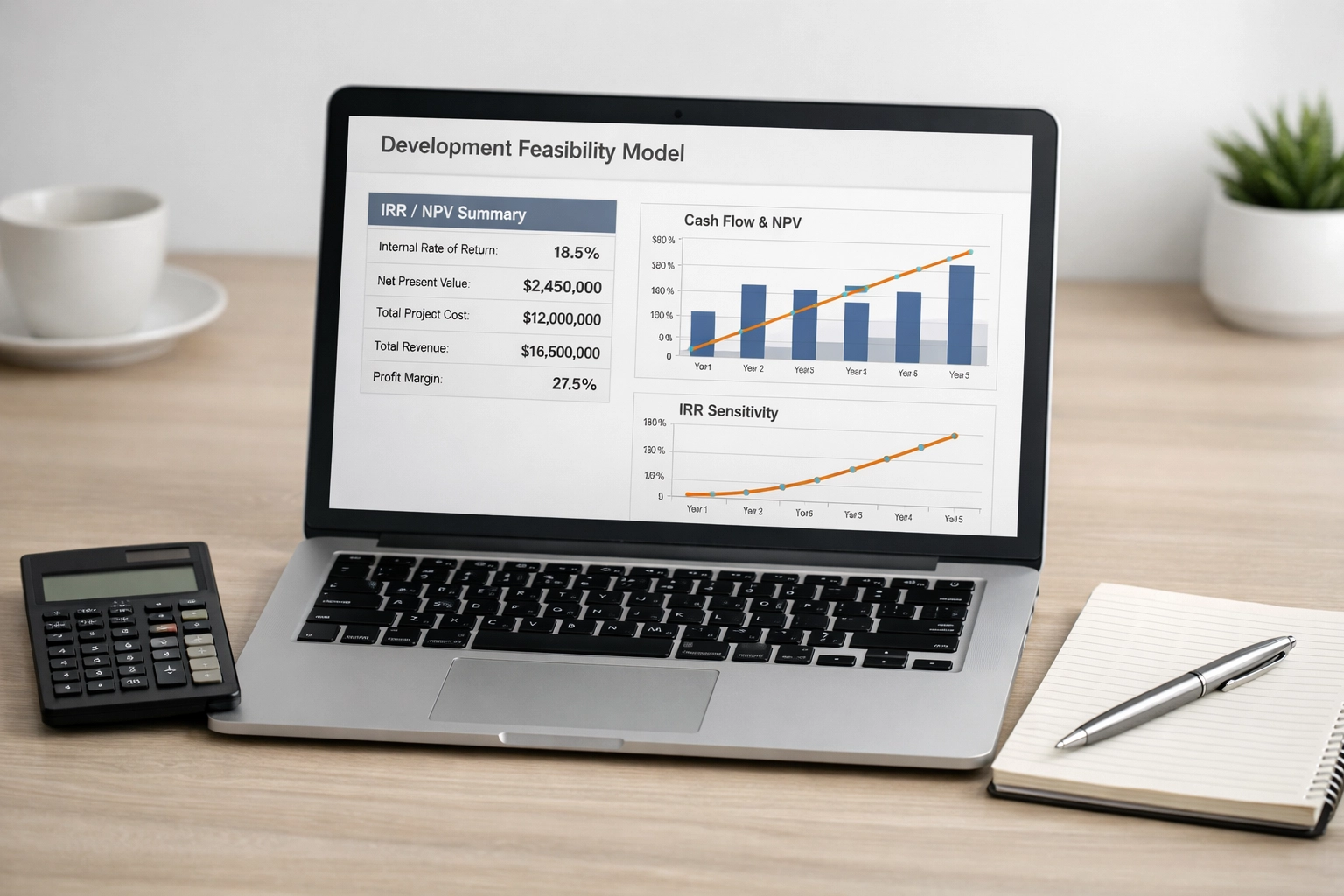
5. Ignoring Inflation and Escalation
Construction timelines often span several years. Costs at the start of a project will not be the costs at the end.
- The Problem: Using current-day costs for a three-year project.
- The Fix: Implement inflationary buffers. Factor in specific construction industry escalation rates rather than general CPI.
- Action Steps:
- Consult with quantity surveyors on projected material cost increases.
- Review labor availability and potential wage hikes.
- Apply escalation monthly or quarterly across the project timeline.
6. Overlooking Legal and Regulatory Factors
Regulatory hurdles can stop a project entirely. Many developers underestimate the time and cost of compliance.
- The Problem: Misunderstanding zoning laws or environmental requirements.
- The Fix: Conduct a thorough review of local, state, and federal regulations. Engage specialists to identify potential constraints early.
- Action Steps:
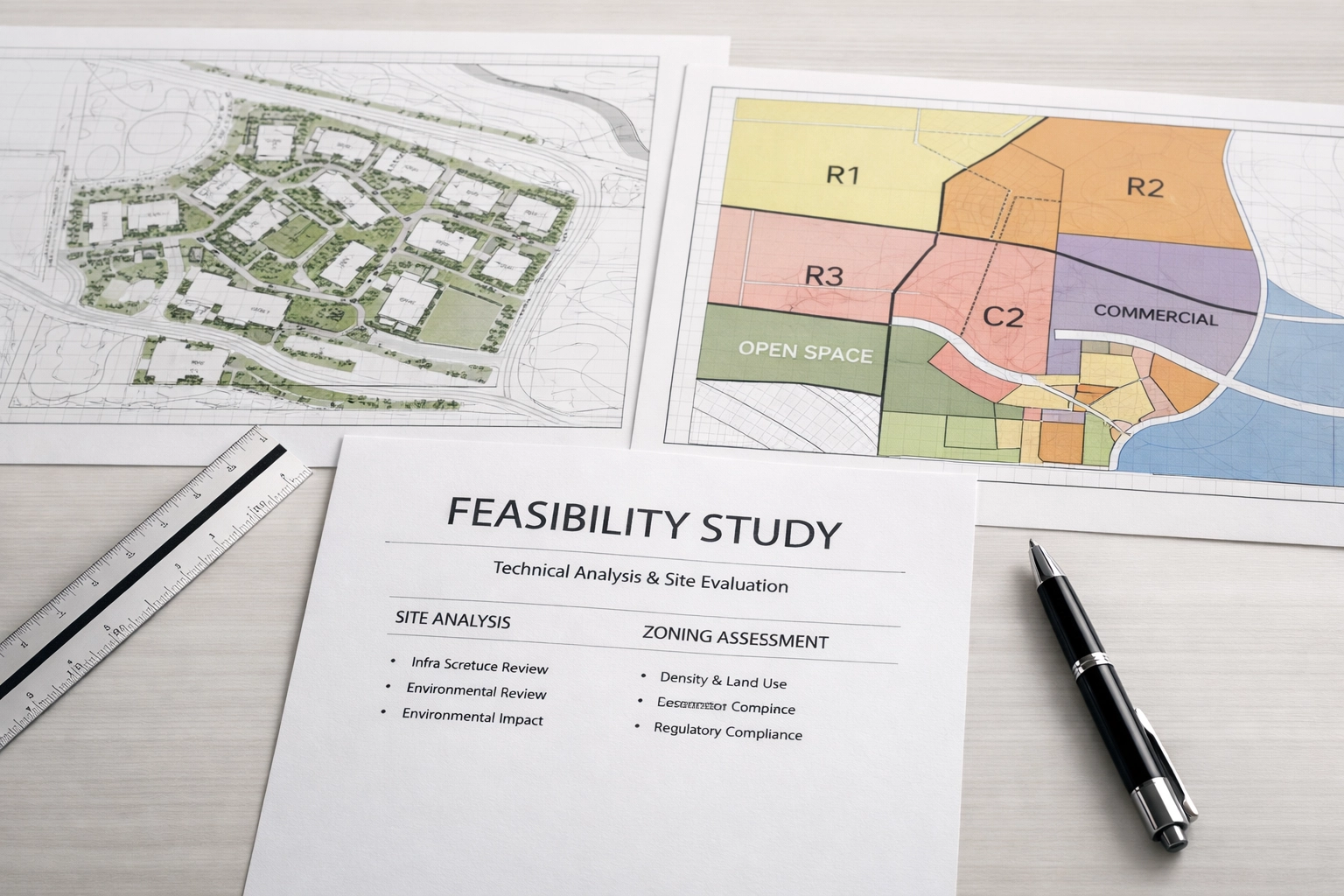
- Review the local Planning Scheme for height and density limits.
- Check for heritage overlays or environmental significance.
- Identify any restrictive covenants on the land title.
7. Inadequate Risk Assessment
Risk is inherent in development. A feasibility study without a risk mitigation plan is incomplete.
- The Problem: Treating risk as a single line item for "Contingency."
- The Fix: Conduct a comprehensive SWOT analysis. Create actionable mitigation plans for identified threats.
- Action Steps:
- Assess the impact of rising interest rates on debt servicing.
- Evaluate the risk of contractor insolvency.
- Model the impact of planning approval delays on holding costs.
8. Ignoring Stakeholder Input
Projects do not exist in a vacuum. Community and investor feedback can change project requirements significantly.
- The Problem: Developing a project that the community or financiers do not support.
- The Fix: Engage with key stakeholders during the feasibility phase. Understand their concerns and incorporate feedback into the design.
- Action Steps:
- Review previous community objections in the local area.
- Consult with potential financiers to understand their lending criteria.
- Engage with local authorities early for informal feedback.

9. Overlooking Operating Expenses
Profitability depends on more than just the sale price. Ongoing costs can impact the feasibility for long-term hold assets.
- The Problem: Focusing on gross revenue while ignoring net cash flow.
- The Fix: Incorporate detailed operating expense projections. This is critical for sectors like hotels, retail, and build-to-rent.
- Action Steps:
- Factor in property management fees and leasing commissions.
- Account for land tax, rates, and insurance.
- Include a sinking fund for long-term maintenance.
10. Poor Site Acquisition Research
The feasibility study begins before the purchase. Buying the wrong site makes success impossible regardless of the management quality.
- The Problem: Skipping due diligence during the acquisition phase.
- The Fix: Perform a detailed preliminary feasibility study before committing to a purchase. Use site acquisition services to evaluate site constraints.
- Action Steps:
- Check for underground services that limit building footprint.
- Analyze site access for construction vehicles.
- Evaluate the proximity to essential infrastructure and transport.

How Jinton Fixes the Feasibility Process
Shane Galea and the Jinton team provide end-to-end development management. We eliminate guesswork through rigorous analysis and a proven track record.
Proven Experience
We have managed over $1 billion in development projects. Our expertise spans commercial, retail, residential, and hospitality sectors. This experience allows us to provide accurate benchmarks that other consultants lack.
End-to-End Management
Jinton provides professional representation from site acquisition through to project delivery. We act as your development manager to ensure every assumption in the feasibility study is tested and validated.
Financier Representation
Our team understands what lenders look for. We structure our feasibility studies to meet the strict requirements of major financial institutions. This increases the likelihood of project funding.
Expert Oversight
We provide superintendent and project delivery services to keep projects on track. When the feasibility study is solid, the execution follows more smoothly. We monitor costs, timelines, and quality to protect your profit margins.
Summary Checklist for Your Next Feasibility Study
- Verify Data: Use primary sources for all site and market data.
- Analyze Demand: Base projections on current competitor supply and demographic trends.
- Be Conservative: Test your model with a 10% increase in costs and a 10% decrease in revenue.
- Include All Costs: Don't forget soft costs, utility headworks, and marketing.
- Factor Escalation: Apply construction-specific inflation across the project duration.
- Review Zoning: Confirm all planning and environmental constraints before buying.
- Plan for Risk: Create specific mitigation strategies for interest rates and delays.
- Engage Stakeholders: Consult with financiers and local authorities early.
- Project Net Cash Flow: Include all taxes, maintenance, and management fees.
- Perform Due Diligence: Hire a professional development manager to review the site before acquisition.
To ensure your next project is viable from the start, contact Jinton. We provide the expertise needed to turn a property development feasibility study into a completed, profitable project.