
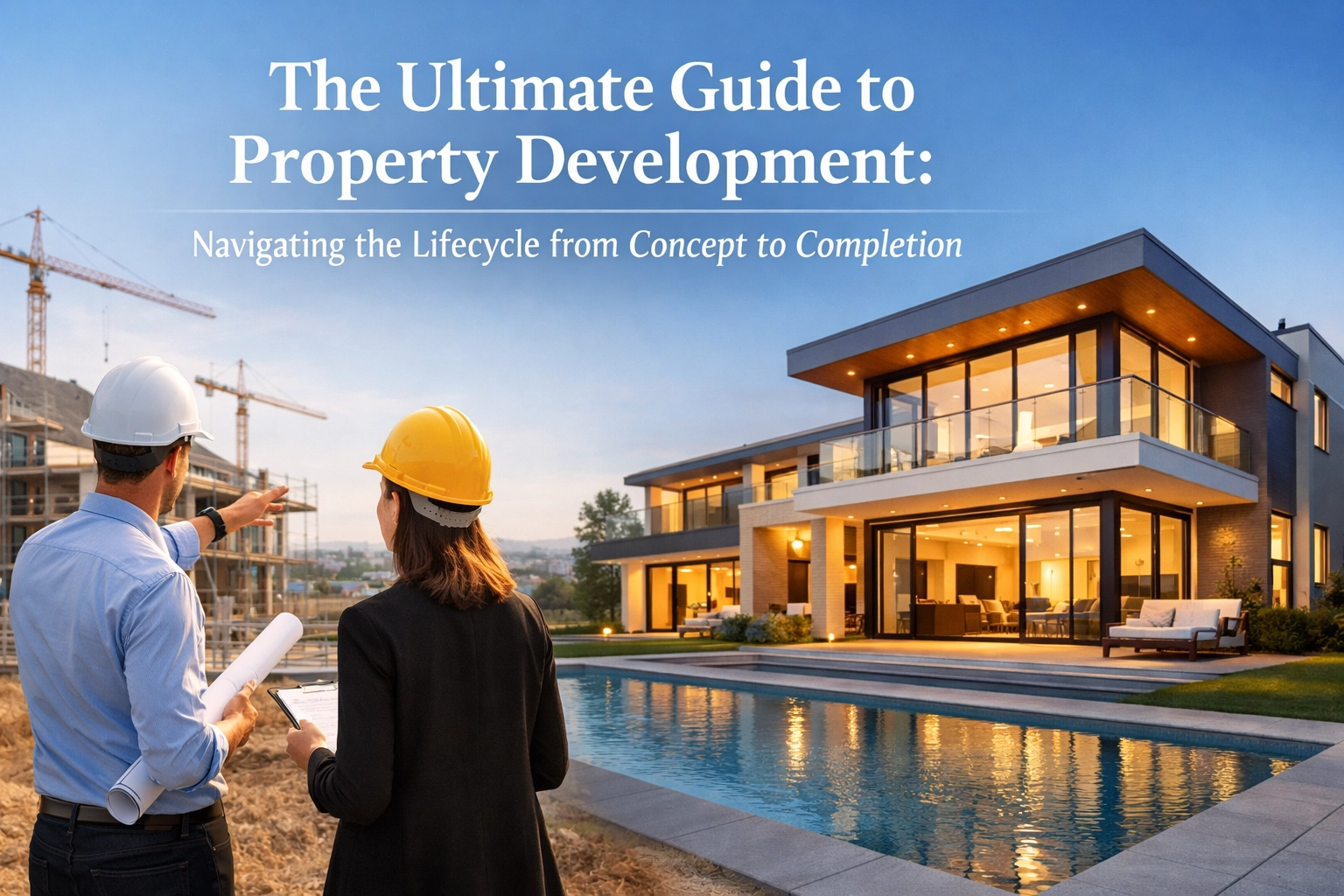
Property development is a structured progression. It transforms an idea into a physical asset. This guide outlines the stages of the development lifecycle. It identifies the requirements for successful delivery.
The Role of a Development Manager
A development manager directs the project from the start. They oversee the feasibility, design, and delivery phases. Their primary goal is to maximize the ROI. They coordinate between stakeholders, consultants, and authorities. Professional management reduces the risk of project failure.
Phase 1: Concept and Feasibility
The first stage is the concept phase. This phase determines if a project is viable.
Market Analysis
Market analysis identifies demand. It examines local demographics. It reviews current supply levels. A developer must understand the target audience. This includes residential buyers, commercial tenants, or retail operators.
Financial Feasibility
Feasibility studies calculate potential profit. They include estimated land costs and construction budgets. They account for professional fees and marketing expenses. A project must meet specific internal rates of return. If the numbers do not work, the project stops here.
Highest and Best Use
This principle identifies the most profitable use for a site. It considers legal constraints. It evaluates physical limitations. It assesses financial feasibility. The goal is to maximize the value of the land.

Phase 2: Site Acquisition and Due Diligence
Once the concept is approved, the site must be secured. This requires thorough investigation.
Due Diligence Procedures
Due diligence is a critical risk management step. It involves checking title encumbrances. It includes environmental testing for contamination. It reviews geotechnical reports for soil stability. Professional construction project management services often assist in this technical review.
Strategic Acquisition
Site acquisition requires negotiation. Developers use various methods to secure land. This includes outright purchase, options, or joint ventures. Examples of large-scale site integration can be seen in projects like Martha Cove.
Zoning and Code Compliance
Zoning determines what can be built. Developers must check local planning schemes. They must identify setbacks, height limits, and density requirements. Early consultation with local councils is standard practice.
Phase 3: Design, Permits, and Entitlements
The design phase turns a concept into a buildable plan. This stage involves significant coordination.
Architectural Design
Architects create the visual and functional layout. The design must balance aesthetics with budget. It must meet the requirements of the end-user. Projects like the Crown Promenade demonstrate the importance of functional design in hospitality.
The Entitlement Process
Entitlements are legal rights to develop. This involves obtaining planning permits. It requires public notification processes. It may involve negotiations with community groups. Delays at this stage impact the project timeline.
Specialized Consultants
Structural engineers design the building frame. Services engineers plan the electrical and mechanical systems. Landscape architects design the outdoor spaces. The development manager coordinates these inputs to ensure a cohesive plan.

Phase 4: Financial Structuring and Representation
Securing capital is the next priority. Property development requires substantial investment.
Capital Stack
The capital stack includes equity and debt. Equity is the developer's own funds or investor capital. Debt is provided by banks or private lenders.
Financier Representation
Lenders require protection for their investment. Financier representation involves independent monitoring of the project. This service ensures that funds are used appropriately. It verifies that construction progress matches the loan drawdowns. This mitigates risk for the lending institution.
Cost Planning
Quantity surveyors provide detailed cost estimates. This prevents budget overruns. The budget must include a contingency for unexpected costs. Maintaining a strict budget is essential for protecting the ROI.
Phase 5: Construction and Project Management
Physical construction is the most intensive phase. It requires active oversight.
Selection of the Contractor
Developers tender the project to builders. They evaluate bids based on price, experience, and timeline. A fixed-price contract is common to manage financial risk.
Superintendent Services
The superintendent acts as an independent administrator. They manage the contract between the developer and the builder. Superintendent services include assessing payment claims. They handle variations to the scope of work. They ensure the quality of the build meets the specified standards.
Project Management
Construction project management services track daily progress. They ensure the site remains safe. They manage the timeline to avoid liquidated damages. Effective management is visible in complex builds like the EastLink Tunnel Control Centre.
Phase 6: Fit-out and Interior Execution
For specialized facilities, the fit-out is a distinct stage. This is common in hospitality and retail.
Specialist Fit-outs
Restaurants, bars, and casinos require high-end finishes. Coordination with kitchen consultants and interior designers is necessary. Examples include Madame Hanoi and the SkyCity Adelaide Casino VIP areas.
Quality Assurance
The project team conducts final inspections. They identify defects that need correction. This is called the "snagging" or "punch list" process. The building must be perfect before the final payment is made.
Phase 7: Completion and Handover
The project concludes when the building is ready for use.
Occupancy Permits
A building surveyor issues an Occupancy Permit. This confirms the building is safe to inhabit. It signifies the end of the construction phase.
Title Registration
For residential projects, land titles are registered. This allows for the settlement of individual lots. This is the stage where the developer recovers their capital and profit.
Handover to Operations
The building is handed over to the facility manager or the owner. Documentation, warranties, and manuals are provided. This ensures the asset can be maintained correctly.

Phase 8: Stabilization and Operation
The final stage is operational maturity.
Leasing and Marketing
For commercial assets, tenants must be secured. This creates the cash flow required to service long-term debt. Marketing begins well before construction ends to ensure immediate occupancy.
Asset Management
Ongoing management protects the value of the property. This includes regular maintenance and tenant relations. Long-term value is optimized through professional building management.
Exit Strategy
The developer decides whether to hold or sell the asset. A sale realizes the final ROI. Holding the asset provides long-term rental income.
Risk Management Throughout the Lifecycle
Property development is inherently risky. Risk management is a continuous process.
- Financial Risk: Managed through accurate feasibility and financier representation.
- Regulatory Risk: Managed through expert planning and legal advice.
- Construction Risk: Managed through superintendent services and robust contracts.
- Market Risk: Managed through thorough research and flexible design.
Summary of Professional Oversight
Successful development requires a multidisciplinary approach. A development manager provides the necessary leadership. Construction project management services provide the technical control. Superintendent services provide the contractual administration.
At Jinton, we provide 25 years of experience across these phases. We ensure projects move from concept to completion with efficiency.
Professional representation is not an expense. It is a safeguard for your capital. It is the most reliable way to secure a project's success.